


Not everyone is welcome to buy JAV porn star’s controversial memecoin
Japanese porn star and pop singer Yua Mikami has launched a new memecoin project on Solana, to lift More than $2.9 million (over 19,000 soles) are in pre-sale at the time of writing, despite growing concerns about its management.
It was a pre-sale Announce On Mikami’s X account, which has 8.2 million followers. It did not promote the project on its other major social platforms, TikTok and Instagram, which have 4.5 million and 3.7 million accounts, respectively.
Blockchain analyst EmberCN raised several Red flags. The presale has no fixed exchange rate or fundraising cap, meaning investors receive a share of the token allocation of 20% based on the amount raised. EmberCN also noted that some participants sent SOLs directly from centralized exchanges, despite explicit warnings not to do so. Since the project also lacks a refund mechanism, these users may lose their money.
While the project’s disclaimer states that Japanese investors are not allowed to participate, no technical restrictions have been implemented to prevent them from doing so. Researcher AB Kuai.Dong He claimed That the rights to Mikami’s Memecoin project have been acquired by Chinese entities, and that the project is being marketed specifically to Chinese investors.
This comes amid growing suspicions about celebrity-backed memecoins, especially Solana, which have been plagued by scams in recent months. In March, a now-banned account Some users have forecast (Unconfirmed) that the Mikami token may be linked to the same network.
However, some cryptocurrency traders welcomed the project It is called A sign that “otaku culture” has officially arrived in cryptocurrencies. Despite the excitement, this isn’t Mikami’s first rodeo. She and Other big Japanese movie stars Previously launched Non-fungible token projects During the 2021 NFT boom.
Ant Digital launches the second layer of Jovay to join Ethereum’s real asset pool
Ant Digital Technologies, a subsidiary of Alibaba’s Ant Group, unveiled a new Ethereum layer 2 network called Jovay on April 30 to compete in the growing race to tokenize real-world assets (RWAs).
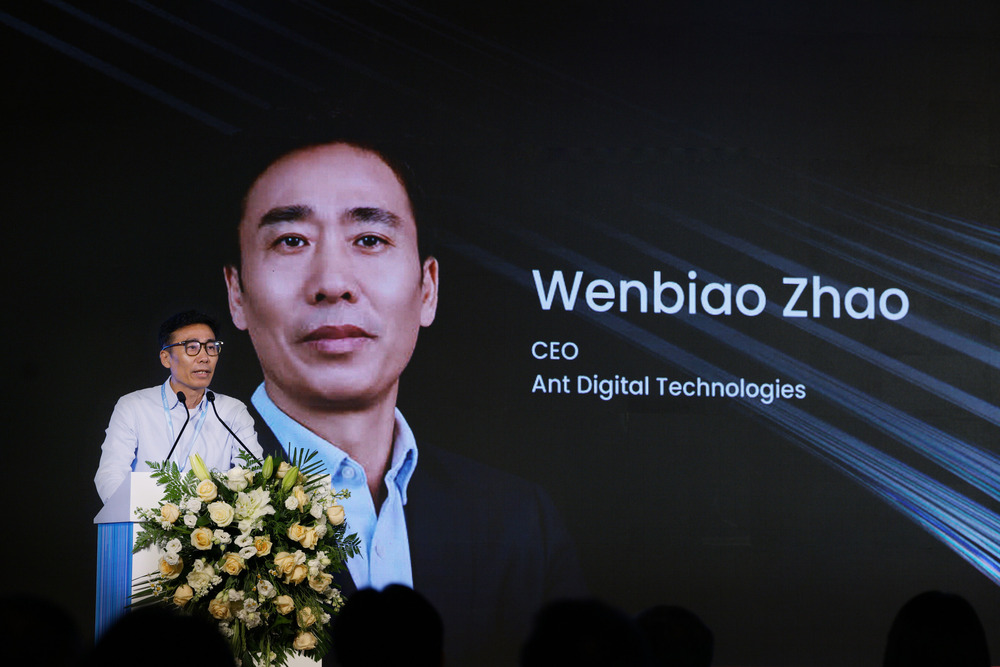
Ant Digital said its new Layer 2 network is capable of handling 100,000 transactions per second with a response time of 100 milliseconds. It forms part of Ant’s broader “dual-chain, single-bridge” strategy, alongside AntChain’s asset layer and crosschain bridge infrastructure.
“Jufai currently operates as a layer 2 solution on Ethereum, focusing on performance and security as core pillars of our platform,” Kobe Zhang, president of Jufai, told the magazine.
“Looking to the future, we are excited to expand our horizons through integrations with various Layer 1 networks to push our scalability even further.”
Zhang says the Jovay team aims to launch the mainnet in the third quarter of 2025.
Ant Digital’s Tier 2 announcement comes amid a strategic expansion. It recently established its global headquarters in Hong Kong and uses Dubai as its base in the Middle East. Both regions are quickly becoming centers of digital asset regulation.
Just a week before the second layer project was unveiled, the company also foot Its new smart contract infrastructure, the AI-powered DeTerministic Virtual Machine (DTVM), uses large language models to automate and accelerate the development process.
Currently, Ethereum is leading the adoption in the RWA space, accounting for the vast majority of US Treasuries and institutional asset flows.
Read also
Features
Meet Dmitry: Co-Founder of Ethereum Creator Vitalik Buterin
Features
Open source or free for everyone? Ethics of Decentralized Blockchain Development
We expect more selling pressure from South Korea in June
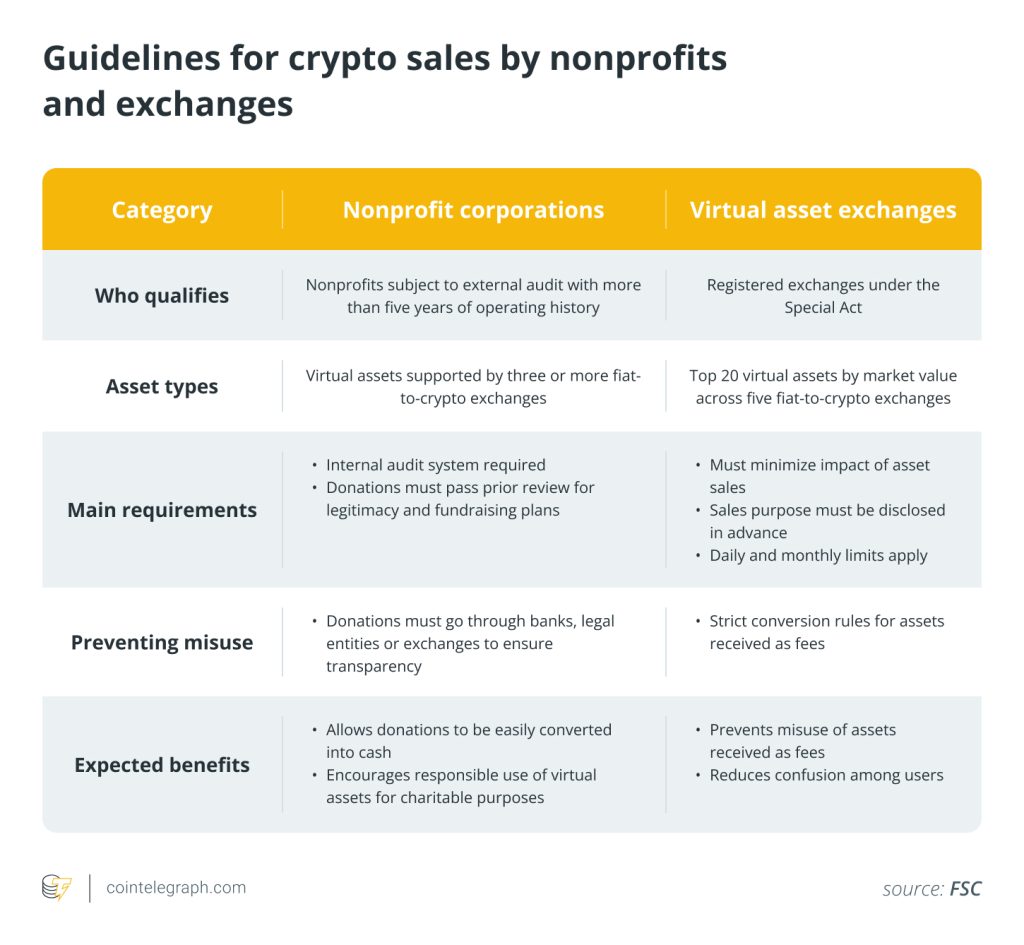
South Korea’s Financial Services Commission (FSC). It is said It has finalized a new set of guidelines that will allow non-profit companies and registered cryptocurrency exchanges to legally sell digital assets starting in June.
The move is part of a broader effort to gradually open up the country’s digital assets market to institutional investors, which was previously restricted by local regulations.
Under the new guidelines, non-profit companies with more than five years of operating history and subject to external audit will be allowed to accept and sell cryptocurrency donations. These organizations must establish internal committees to review donations to assess the legitimacy of funds received and evaluate liquidation plans in advance. Only crypto assets listed on at least three of the five licensed fiat exchanges will be eligible for donation.
Cryptocurrency exchanges will also be allowed to sell digital assets, but with strict conditions aimed at preventing market disruption and conflicts of interest. Only exchanges registered as Virtual Asset Service Providers (VASPs) under Local regulations You will be eligible. Sales can only be made to cover operational expenses and must be limited to the top 20 cryptocurrencies by market cap. Additional restrictions include caps on daily sales and a ban on selling tokens directly through the exchange’s own platform.
The FSC also introduced new listing standards to address the extreme price fluctuations that often occur when tokens debut on local exchanges. So-called “listing pumps” have attracted regulatory scrutiny due to rapid price increases caused by limited initial circulating supply. In response, token issuers will now be required to secure a minimum circulating supply before trading begins, and market orders may be restricted during the early trading stages.
Read also
Features
Meet Dmitry: Co-Founder of Ethereum Creator Vitalik Buterin
Features
Open source or free for everyone? Ethics of Decentralized Blockchain Development
Sky Mavis’ messy divorce with Ragnarok Monster World
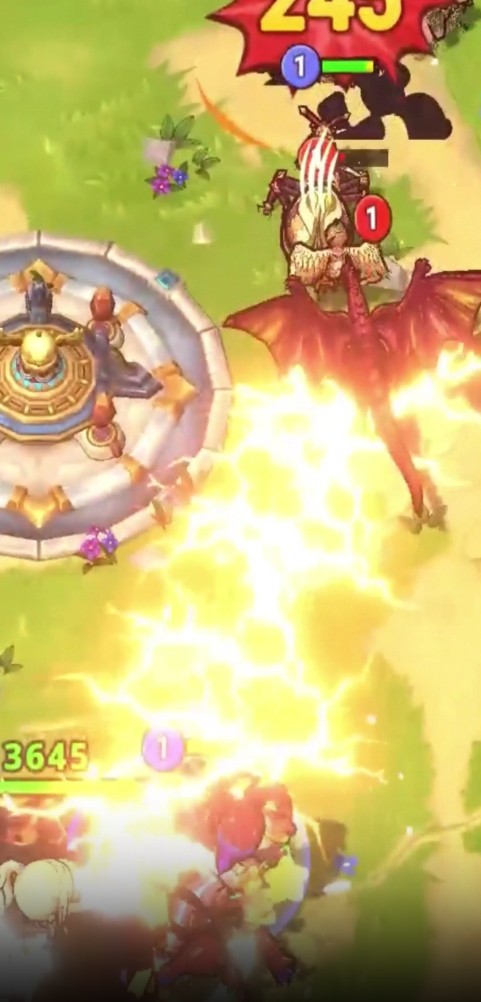
A public spat has emerged between Singapore-based Vietnamese startup Sky Mavis – the developer behind the Ronin blockchain – and Ragnarok Monster World, after Sky Mavis accused the creators of the Web3 game of secretly striking a deal with a rival blockchain.
In a post dated April 27, 2017, Sky Mavis co-founder Alexander Larsen He said The team behind RMW, known as 0x&, ignored the advice and “lost favor with the community”. As a result, the company announced that it would terminate its professional relationships, remove game assets from Sky Mavis products within 48 hours, and remove RMW NFTs from Ronin’s marketplace. The company has also distanced itself from the game’s upcoming ZENY token launch, stating that its presence on Ronin should not be construed as an endorsement or affiliation.
In a follow-up blog post, Larsen He said Instead of removing the NFTs entirely, Sky Mavis will be revoking the game’s verification badge on Ronin’s marketplace, indicating its unaffiliated status from now on.
The move prompted an immediate response from Ragnarok Monster World. He – she to reject Engaging in confidentiality agreements He said that all discussions with other blockchain networks were shared with Sky Mavis. The developers also stated that they have fulfilled all contractual obligations and committed to continuing to run the game on Ronin.
The public controversy highlights a fundamental paradox in Web3 games. One of the founding promises of the space is that blockchain games are intended to be immune to bans and shutdowns. Ronin is moving towards this vision with a permissionless architecture that allows anyone to deploy smart contracts or launch games without Sky Mavis’ approval. However, the ecosystem still revolves around the strength of the Sky Mavis platform. Projects may be technically impermissible, but without market validation or ecosystem support, they risk losing exposure to the Ronin community. RMW is still on the series, but has been stripped of the network’s seal of approval.
Subscribe
The most engaging reads on blockchain. It is delivered once a week.


Johan Yuen
Johan (Hysop) Yuen is a Cointelegraph staff writer and multimedia journalist who has been covering blockchain-related topics since 2017. His background includes roles as an assignment editor and producer at Forecast, as well as technology and policy-focused reporting positions at Forbes and Bloomberg BNA. He has a degree in journalism and owns Bitcoin, Ethereum, and Solana in amounts that exceed Cointelegraph’s disclosure threshold of $1,000.